
zennergykai.com

Author name: saikatthandardm@gmail.com

FLEXIBILITY
Yoga

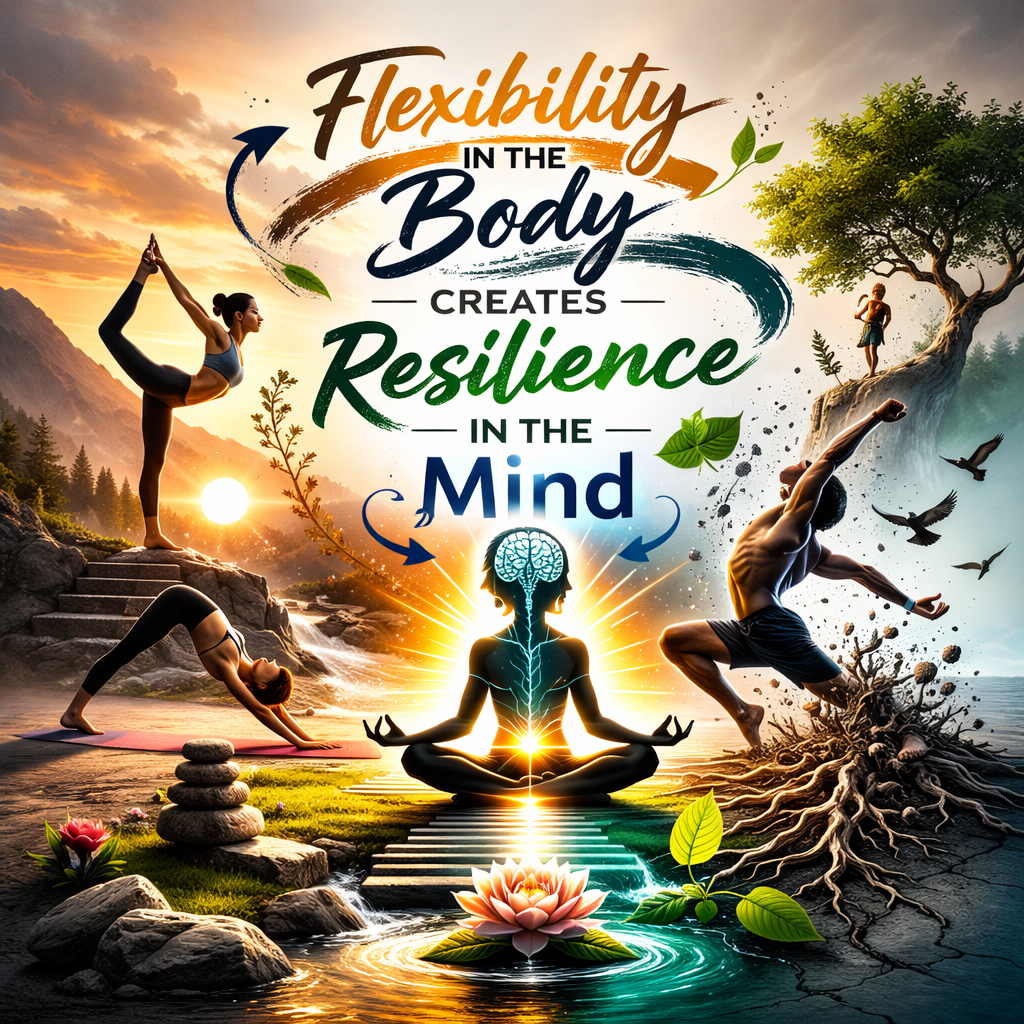
Flexibility in the body creates resilience in the mind.

Flexibility in the body creates resilience in the mind. To become mentally strong, being mentally and physically flexible helps us get there. As Albert Einstein stated, “Intelligence is created through the process of adapting.” We are analogous to water; although we can take on many shapes, we will always be water. The ability to bend rather than break is what allows us to meet any obstacle in our path. Instead of bending when confronted with adversity, we are rigid and stiff, similar to when a metal object loses its temper due to excessive heating. As humans, we can repurpose ourselves; this goes beyond evolutionary Darwinism. We can rely on our willpower to create change in our whole person, and by changing the way we act and experience things. You develop any skill through practice; if you do not develop your strengths, then your abilities will fade away. Yet when you practice, those abilities will evolve into the skill set that you want. In order to achieve our desired results continually, we must clearly adapt to how we conduct business, embrace change, and implement “intentional chaos” in our lives. By developing multiple pathways toward our goals, we remain adaptable, resilient, and ready to face whatever obstacles life might present us. Flexibility Leads to Resilience Flexibility is a foundational pillar of building resilience over time. Regulatory flexibility, as defined by George A. Bonanno and Christopher L. Burton (2013), is the ability to accurately evaluate a situation, select appropriate coping strategies, and modify those strategies based upon subsequent outcomes. They maintain that the key to demonstrating true strength is not to rely upon one single coping method but rather to adapt your response to new circumstances. Research supports this idea. Šimunić et al. (2022); have shown that individuals with greater psychological flexibility reported significantly less anxiety and depression during the COVID-19 pandemic. Similarly, Lee and Park (2022) found that students demonstrating greater psychological flexibility had 40% fewer depressive symptoms than their counterparts. The development of psychological flexibility has been shown to enhance both short-term ability to cope with stress and long-term mental health/wellness through enhancing one’s ability to cope well over time. Neuroplasticity Offers the Brain the Ability to Change Neuroplasticity—the brain’s ability to adapt and reorganize—allows us to reshape our thinking and behavior based on what we experience. Exposure to stimulating environments, regular physical exercise, and mental training all strengthen adaptive plasticity, which supports learning, memory, and overall cognitive function. Research shows that such habits can even slow age-related decline. For example, older adults who engage in aerobic exercise often experience growth in the hippocampus, the brain region responsible for memory, leading to improved recall and cognitive performance. In contrast, non-adaptive plasticity can reinforce negative patterns or harmful habits. A common example is a stroke patient who avoids using an affected limb; over time, the brain may “learn” this inactivity, making recovery more difficult. Fortunately, targeted therapies like constraint-induced movement therapy and virtual reality rehabilitation can help retrain the brain, encouraging recovery and restoring lost abilities through consistent, guided practice. Resilience is often defined as the capacity for one to endure adverse situations, to adapt to change, and to be successful in spite of challenges. Resilience is not exclusively a mental characteristic; however, it has very distinct links to the body. Through physical flexibility, which is developed through various forms of exercise (i.e., yoga, stretching, and mindful movement), the mental resilience of an individual will be positively affected. The body and the mind are closely related systems – one will aid in the development of the other.   Scientific Explanation of Flexibility Physical flexibility is the ability of our muscles and joints to move freely through their full range of motion. Physical flexibility increases blood flow to all parts of the body, decreases muscle tension, and improves posture. On the neurological level of our bodies, stretching the muscles activates the calming response of the sympathetic branch of the nervous system and decreases the production of stress-related hormones. The major advantages of using yoga include:   Reduction in risk of injury; Improvement in both balance and mobility/; Easier recovery from strenuous activities; and Decreased muscle tension will translate into reduced mental tension.   What is Flexibility? Although moving your body to Touch Your Toes is part of becoming more flexible, true flexibility requires you to develop the ability to be adaptable. When the physical body learns to be able to bend without damage, it will support the mental capacity to be adaptable.   Neuroplasticity: Just as your flexible muscles can stretch on their own, your flexible brain bends to take on new challenges. When you stretch, you promote the ability to be flexible and adaptable in your thinking.   Stress Regulation: As you stretch, you are sending signals through the body of relaxation, which signals your body to instigate the relaxation response. As a result, stress hormones are reduced, and you regulate emotions better.   Resiliency: Your resilient body serves as the conduit for the brain to give up its rigidity and promote openness to change. Ways to Develop Resilience & Flexibility Practicing Yoga Styles such as Yin and Vinyasa incorporate physical stretching with mindfulness Improved flexibility gained through the practice of yoga teaches acceptance and patience. Daily Stretching Routine Reducing daily stiffness caused by sedentary lifestyle choices through stretching on a daily basis. Targeting specific areas of the body (i.e., hips, shoulders & spine) that experience increased amounts of physical stress. Breathing Exercises Utilizing deep breathing will increase the amount of oxygen supplied to your body and relax your nervous system. Many breathing exercises, such as pranayama, focus on creating a connection between physical flexibility and mental clarity. Movement with Purpose Tai Chi and Qigong movements support physical fluidity and balance while helping to cultivate a sense of calmness. Both Tai Chi and Qigong support the incorporation of physical flexibility into a comprehensive resiliency program. Final Thoughts Being flexible physically is not only an aspect of anatomy but also a mindset


Balance-is-strength-expressed-with-control.
Yoga

Balance is strength expressed with control.

Balance is Strength Expressed with Control: The Hidden Key to Performance and Life Mastery   Introduction In fitness, sports, and even daily life, strength often takes the spotlight. But true mastery lies in balance—the ability to express strength with control. Stability is not just about standing on one leg or holding a yoga pose; it’s the foundation of athletic performance, injury prevention, and graceful living. This article explores why balance is strength expressed with control, how to train it, and why it’s essential for both physical and mental growth. What Is Balance? Balance is the body’s ability to maintain stability while performing movements. It combines: Muscular strength (power to move and hold positions) Neuromuscular control (coordination between brain and muscles) Balance (resisting external forces) Without balance, strength becomes raw and uncontrolled. With balance, strength transforms into precision. Why Balance Equals Controlled Strength Strength without balance: A weightlifter may lift heavy loads but risk injury if balance falters. Balance without strength: A dancer may move gracefully but lack the power to sustain demanding routines. Strength + balance: A martial artist delivers powerful strikes while staying grounded, maximizing efficiency. This synergy is why balance is often called the “silent strength.” The Science Behind Stability Balance involves three systems: Visual system – Eyes provide spatial awareness. Vestibular system – Inner ear detects motion and orientation. Proprioceptive system – Muscles and joints sense position and movement. Training balance strengthens these systems, improving overall athletic control. Benefits of Training Balance Improved athletic performance: Enhances agility, coordination, and reaction time. Injury prevention: Reduces falls, sprains, and joint stress. Functional strength: Makes everyday tasks easier, from carrying groceries to climbing stairs. Mind‑body connection: Builds focus, discipline, and awareness. Balance in Sports and Fitness Yoga: Poses like Tree Pose (vrikshasana) or Warrior III (virabhadrasanaIII)demand strength expressed through balance. Weightlifting: Squats and deadlifts require balance to prevent collapse under load. Martial Arts: Every strike or defense depends on stability to maintain power and control. Gymnastics: Balance beams showcase strength refined into precision. Practical Balance Training Exercises Beginner Level Single‑leg stands Heel‑to‑toe walking Balance ball seated holds Intermediate Level Single‑leg squats Plank with shoulder taps Lunges on unstable surfaces Advanced Level Pistol squats Handstands Bosu ball push‑ups Balance in Everyday Life Balance isn’t just for athletes. It helps: Seniors avoid falls. Office workers reduce back pain. Children develop coordination. Professionals manage stress with mental stability. Mental Balance: Strength of the Mind Balance is not only physical—it’s mental. Emotional stability, focus, and resilience are forms of strength expressed with control. Meditation, mindfulness, and structured routines build this inner balance. Mental stability  strength of mind are enhanced through regular, varied exercise, acting as a “muscle” that strengthens with consistent, challenging practice. Specific Exercises to Build Mental Strength Mindful Breathing & Yoga: Improves focus and helps manage stress. Progressive Muscle Relaxation (PMR): Tensing and releasing muscles helps align mental and physical relaxation. Structured Physical Activity: Cardio (running, cycling) and strength training improve concentration, memory, and mood. Nature Walks: Walking in natural environments provides a mental reset. Mental fitness is essential for maintaining brain health. Managing stress, and staying emotional balanced. Simple exercises such as mindful breathing, focused training, gratitude practice brain games and physical activity can significantly improve mental strength and overall wellbeing consistent practice helps build resilience and supports along term mental health. Why Balance Training Matters More Than You Think Balance is your body’s ability to maintain control of movement and posture, whether you’re walking, lifting, or simply standing still. It relies heavily on the core, legs, and nervous system all working together. When one part is weak or misaligned, it throws off everything else—leading to wobbly movements, muscle imbalances, or even injury Accessible for All Fitness Levels The beauty of balance training is that it’s scalable. Beginners can start with standing exercises like single-leg holds or gentle shifts on a rocker board. More advanced users can level up with dynamic drills using balance boards or slant boards to challenge their balance in motion. This makes it a versatile addition to any fitness routine; whether you’re rehabilitating from an injury, trying to improve your sports performance, or simply want to feel more grounded in your day-to-day movement. Finding Balance in More Ways Than One In a world that often pushes us to move faster, lift heavier, and do more, stability training offers a quieter but equally powerful path to strength and stability. It’s not flashy, but it’s foundational. Throughout this blog, we’ve looked at how improving stability enhances core strength, sharpens coordination, and significantly reduces the risk of injury. And the best part? It’s accessible to everyone, at any stage of fitness. From beginner-friendly one-leg stands to dynamic drills on a rocker board, balance training gently pushes your body to engage smarter, not just harder. Over time, those small, steady improvements build a strong, resilient foundation—not just for your workouts, but for how you move through daily life. Weekly Balance Training Plan Day Focus Duration Notes Mon Beginner Series (1–5) 20 min Focus on posture and control Wed Intermediate Series (6–10) 25 min Add foam pad or head turns Fri Advanced Series (11–15) 30 min Combine yoga or Tai Chi Sat Gentle walk or mobility 20 min Active recovery   Common Mistakes to Avoid Locking knees instead of keeping them slightly bent. Holding breath — always breathe steadily. Rushing through movements. Ignoring core engagement — your core supports all balance work.  

DISCIPLINE
Workout

Discipline: No Shortcuts, No Excuses—Only Growth

Discipline: No Shortcuts, No Excuses—Only Growth   Introduction In every field of human endeavour — whether fitness, academics, entrepreneurship, or art — the path to mastery is paved not with shortcuts or excuses, but with deliberate repetition, unwavering discipline, and the steady pursuit of growth. This philosophy is timeless, echoing through the wisdom of athletes, scholars, and innovators alike. It rejects the allure of quick fixes and embraces the slow, compounding power of consistent effort. This essay explores the meaning of each pillar — no shortcuts, no excuses, repetition, discipline, and growth — and demonstrates how they interconnect to form a sustainable framework for success. Drawing on research in psychology, education, and performance science, it shows why this mantra is more than motivational rhetoric: it is a practical system for transformation. No Shortcuts: The Illusion of Easy Wins Shortcuts promise speed but often undermine depth. In fitness, fad diets and extreme supplements may deliver temporary results but compromise long-term health. In academics, cramming before exams may yield passing grades but fails to build lasting knowledge. In business, chasing trends without strategy may bring short-term attention but not sustainable growth. Philosophical View: Shortcuts are a denial of process. They assume that outcomes can be divorced from effort, which is rarely true. Practical Example: A student who learns a language through daily practice achieves fluency, while one who relies on translation apps remains dependent. Research Insight: Studies on deliberate practice show that mastery requires sustained effort over time, not sporadic bursts of activity. Rejecting shortcuts means embracing the journey, even when progress feels slow. It is the difference between fragile success and resilient achievement. No Excuses: Accountability as a Discipline Excuses are barriers disguised as reasons. They externalize responsibility, shifting blame to circumstances rather than confronting personal agency. Discipline begins when excuses end. Philosophical View: Excuses weaken resolve by creating mental loopholes. Practical Example: An athlete who trains despite rain develops resilience, while one who skips sessions rationalizes stagnation. Research Insight: Growth mindset studies show that individuals who attribute setbacks to effort rather than innate ability are more likely to persist and succeed. “No excuses” is not about denying challenges; it is about refusing to let them dictate outcomes. It is the commitment to act despite imperfection. Repetition: The Engine of Mastery Repetition is the mechanism by which skills become habits and habits become identity. It engrains patterns into muscle memory and cognitive frameworks, transforming effort into automatically. Philosophical View: Repetition is not monotony; it is refinement. Each cycle deepens mastery. Practical Example: A musician practicing scales daily builds fluency that enables improvisation. Research Insight: Neuroscience shows that repeated practice strengthens neural pathways, making actions more efficient and natural. Repetition is the invisible architect of excellence. It is the daily grind that compounds into extraordinary ability. Discipline: The Bridge Between Intention and Achievement Motivation is fleeting; discipline endures. Discipline is the system that ensures repetition occurs even when motivation wanes. It is the structure that transforms intention into consistent action. Philosophical View: Discipline is freedom. By binding oneself to routines, one liberates energy from indecision. Practical Example: A writer who commits to 500 words daily produces a book, while one who waits for inspiration produces fragments. Research Insight: Behavioral psychology emphasizes the role of structured routines in habit formation, showing that discipline sustains progress when willpower falters. Discipline is not punishment; it is empowerment. It is the conscious choice to prioritize long-term growth over short-term comfort. Growth: The Natural Outcome of Consistency Growth is the inevitable reward of repetition and discipline. It is incremental, often invisible at first, but compounding over time. True growth is not linear; it is exponential, fueled by accumulated effort. Philosophical View: Growth is transformation, not just improvement. It changes not only what we can do but who we are. Practical Example: A student who reads daily improves vocabulary, comprehension, and confidence, reshaping identity as a learner. Research Insight: The Integrated Growth Systems Framework (IGSF) highlights how beliefs, behaviors, and environments interact to produce sustained development. Growth is not a destination but a continuous process. It is the unfolding of potential through disciplined repetition. Interconnection of the Five Pillars These principles are not isolated; they form a system: Rejecting shortcuts ensures depth. Rejecting excuses ensures accountability. Repetition engrains skills. Discipline sustains repetition. Growth emerges as the cumulative result. Together, they create a cycle of sustainable progress. Each principle reinforces the others, forming a holistic framework for achievement. Applications Across Domains Fitness Progressive overload, consistent recovery, and natural nutrition embody repetition and discipline. Avoiding shortcuts like extreme supplements ensures sustainable growth. Academics Daily reading, structured study blocks, and consistent project formatting build mastery. Excuses like “no time” dissolve when discipline creates fixed schedules. Entrepreneurship Iterative refinement of products and strategies reflects repetition. Discipline in execution ensures long-term brand growth. Personal Development Journaling, meditation, and skill practice embody repetition. Discipline in routines fosters resilience and identity transformation. Insights from Research Recent studies reinforce this philosophy: Growth Mindset Research (2025): Shows that discipline and repetition in learning environments foster long-term achievement. Integrated Growth Systems Framework (IGSF): Demonstrates how beliefs and behaviors interact to produce measurable growth. Behavioral Psychology: Confirms that structured routines sustain progress when motivation fluctuates. These findings validate the mantra as more than motivational — it is evidence-based. Challenges and Misconceptions Monotony vs. Mastery: Repetition may feel monotonous, but it is the path to mastery. Discipline vs. Rigidity: Discipline is structure, not inflexibility. It allows adaptation within consistency. Growth vs. Perfection: Growth is progress, not perfection. It values improvement over flawless outcomes. Understanding these distinctions prevents misapplication of the philosophy. Conclusion “No shortcuts. No excuses. Just repetition, discipline, and growth.” This mantra is a blueprint for sustainable success. It rejects the illusions of quick fixes and embraces the compounding power of consistent effort. It is as relevant to athletes as to scholars, entrepreneurs, and artists. Growth is not achieved by chance but by choice — the choice to reject shortcuts, silence excuses, embrace repetition, practice discipline, and trust

Workout

Transforming Mental Barriers Into Physical Strength

Transforming Mental Barriers Into Physical Strength Workouts not only help you to get strong, its push your limits to the end of your comfort most limits are not found in body, they are built in the mind. before a workout becomes difficult, the brain whispers “stop”. before progress happens, doubt appears. before transformation, resistance shows up. at zennergykai, we believe real strength is created when you learn to move through those mental barriers instead of obeying them. our mind want to stop and quit, because it is phycological over physical Most limits are not found in the body — they are built in the mind. Before a workout becomes difficult, the brain whispers “stop.” Before progress happens, doubt appears. Before transformation, resistance shows up. At Zennergy Kai, we believe real strength is created when you learn to move through those mental barriers instead of obeying them.   The Mind Quits Before the Body Fatigue is often psychological before it is physical.   You think: “I can’t do another rep.” “This is too hard.” “Maybe tomorrow.” But your muscles still have more to give. The breakthrough moment in training happens when discipline becomes louder than comfort. Progress in fitness and life isn’t just about muscles or endurance — it starts with mindset. Mental barriers like doubt, fear, and fatigue often hold us back more than physical limits. The real transformation happens when you break through those barriers and channel resilience into strength training, discipline, and personal growth. Mental Toughness: The Foundation of Physical Progress,  is a measure of individual physiological and confidence that may predict success in sport, education, and in the workplace.The concept emerged in the context of sports training and sports psychology, as one of a set of attributes that allow a person to become a better athlete and able to cope with difficult training and difficult competitive situations and emerge without losing confidence. The term has been used by coaches, sport psychologists, sports commentators, and business leaders. Mental toughness shares key characteristics with girt.Additional synonyms might include resilience, determined, strong-willed, and stalwart. A person who has the qualities of mental toughness might accept challenges as they arise aiding them to achieve their goals whether that be in sports, academics, or in their professions.  

Uncategorized

physical benefits of daily workout and training

daily workout and physical training benefits workout training benefits you in multiple dimensions like – physically, mentally, and even socially. physical fitness training plays a vital role in enhancing both physical and mental wellbeing. regular workouts not only improve strength, endurance, and flexibility but also foster discipline and resilience. at zennergykai we explore how structured training routines contribute to sustainable health and long-term improvement. lets talk about some benefits of routine workout strength & endurance: builds muscle strength and improves stamina trough progressive overload. cardiovascular health: enhances heart and lung function, reducing risk of hypertension and heart disease. weight management: burns calories, supports fat loss, and helps maintain a healthy body composition. bone density: resistance training strengthens bones, lowering the risk of osteoporosis (a skeletal disorder). flexibility & mobility: stretching and functional movements improve joint health and reduce injury risk. lets talk about some mental benefits. stress relief: daily exercise reduce cortisol and boost endorphins improving mood. sharper focus: regular training enhances cognitive function and memory. confidence boost: archiving fitness goals builds self-esteem and discipline. better sleep: physical activity helps you regulate sleep cycles and improves sleep quality. life style and social benefits routine & discipline: training instills consistency and structure in daily life. community: gyms, sports, or group classes foster social connections. energy levels: regular workouts increase vitality, making everyday tasks easier. longevity: active lifestyles are strongly linked to longer, healthier lives. workout isn’t just about looking fit-it’s about building resilience, balance, and a healthier mindset.

Scroll to Top