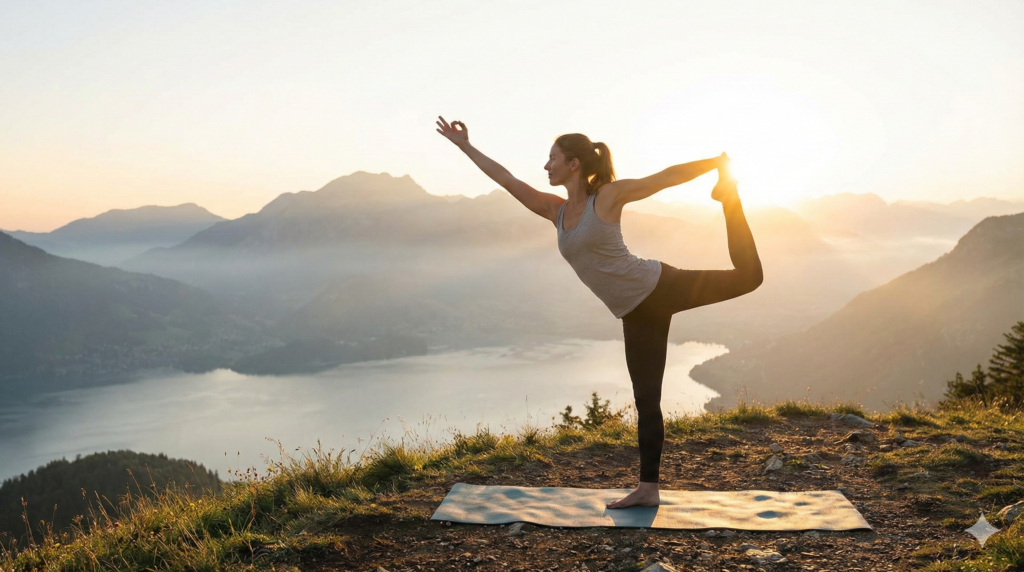
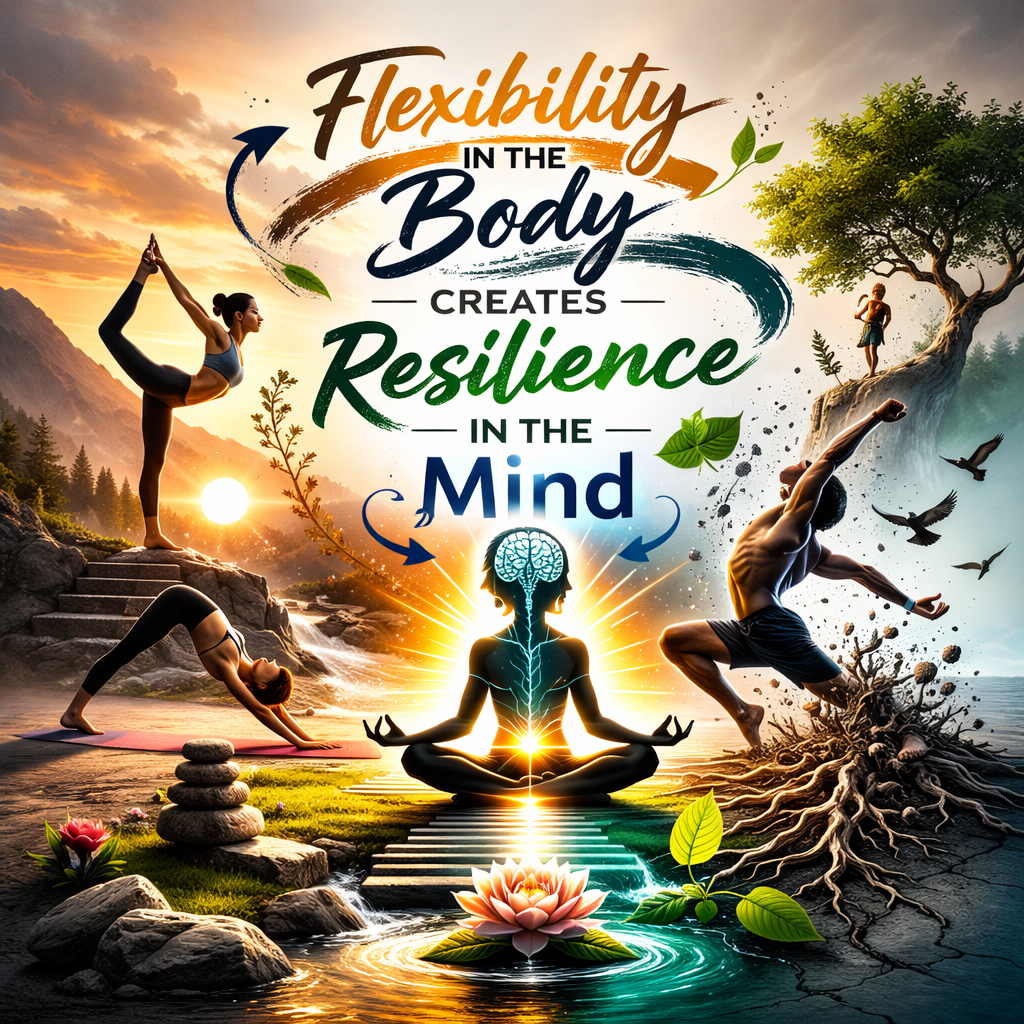
Flexibility in the body creates resilience in the mind.
Flexibility in the body creates resilience in the mind. To become mentally strong, being mentally and physically flexible helps us get there. As Albert Einstein stated, “Intelligence is created through the process of adapting.” We are analogous to water; although we can take on many shapes, we will always be water. The ability to bend rather than break is what allows us to meet any obstacle in our path. Instead of bending when confronted with adversity, we are rigid and stiff, similar to when a metal object loses its temper due to excessive heating. As humans, we can repurpose ourselves; this goes beyond evolutionary Darwinism. We can rely on our willpower to create change in our whole person, and by changing the way we act and experience things. You develop any skill through practice; if you do not develop your strengths, then your abilities will fade away. Yet when you practice, those abilities will evolve into the skill set that you want. In order to achieve our desired results continually, we must clearly adapt to how we conduct business, embrace change, and implement “intentional chaos” in our lives. By developing multiple pathways toward our goals, we remain adaptable, resilient, and ready to face whatever obstacles life might present us. Flexibility Leads to Resilience Flexibility is a foundational pillar of building resilience over time. Regulatory flexibility, as defined by George A. Bonanno and Christopher L. Burton (2013), is the ability to accurately evaluate a situation, select appropriate coping strategies, and modify those strategies based upon subsequent outcomes. They maintain that the key to demonstrating true strength is not to rely upon one single coping method but rather to adapt your response to new circumstances. Research supports this idea. Šimunić et al. (2022); have shown that individuals with greater psychological flexibility reported significantly less anxiety and depression during the COVID-19 pandemic. Similarly, Lee and Park (2022) found that students demonstrating greater psychological flexibility had 40% fewer depressive symptoms than their counterparts. The development of psychological flexibility has been shown to enhance both short-term ability to cope with stress and long-term mental health/wellness through enhancing one’s ability to cope well over time. Neuroplasticity Offers the Brain the Ability to Change Neuroplasticity—the brain’s ability to adapt and reorganize—allows us to reshape our thinking and behavior based on what we experience. Exposure to stimulating environments, regular physical exercise, and mental training all strengthen adaptive plasticity, which supports learning, memory, and overall cognitive function. Research shows that such habits can even slow age-related decline. For example, older adults who engage in aerobic exercise often experience growth in the hippocampus, the brain region responsible for memory, leading to improved recall and cognitive performance. In contrast, non-adaptive plasticity can reinforce negative patterns or harmful habits. A common example is a stroke patient who avoids using an affected limb; over time, the brain may “learn” this inactivity, making recovery more difficult. Fortunately, targeted therapies like constraint-induced movement therapy and virtual reality rehabilitation can help retrain the brain, encouraging recovery and restoring lost abilities through consistent, guided practice. Resilience is often defined as the capacity for one to endure adverse situations, to adapt to change, and to be successful in spite of challenges. Resilience is not exclusively a mental characteristic; however, it has very distinct links to the body. Through physical flexibility, which is developed through various forms of exercise (i.e., yoga, stretching, and mindful movement), the mental resilience of an individual will be positively affected. The body and the mind are closely related systems – one will aid in the development of the other. Scientific Explanation of Flexibility Physical flexibility is the ability of our muscles and joints to move freely through their full range of motion. Physical flexibility increases blood flow to all parts of the body, decreases muscle tension, and improves posture. On the neurological level of our bodies, stretching the muscles activates the calming response of the sympathetic branch of the nervous system and decreases the production of stress-related hormones. The major advantages of using yoga include: Reduction in risk of injury; Improvement in both balance and mobility/; Easier recovery from strenuous activities; and Decreased muscle tension will translate into reduced mental tension. What is Flexibility? Although moving your body to Touch Your Toes is part of becoming more flexible, true flexibility requires you to develop the ability to be adaptable. When the physical body learns to be able to bend without damage, it will support the mental capacity to be adaptable. Neuroplasticity: Just as your flexible muscles can stretch on their own, your flexible brain bends to take on new challenges. When you stretch, you promote the ability to be flexible and adaptable in your thinking. Stress Regulation: As you stretch, you are sending signals through the body of relaxation, which signals your body to instigate the relaxation response. As a result, stress hormones are reduced, and you regulate emotions better. Resiliency: Your resilient body serves as the conduit for the brain to give up its rigidity and promote openness to change. Ways to Develop Resilience & Flexibility Practicing Yoga Styles such as Yin and Vinyasa incorporate physical stretching with mindfulness Improved flexibility gained through the practice of yoga teaches acceptance and patience. Daily Stretching Routine Reducing daily stiffness caused by sedentary lifestyle choices through stretching on a daily basis. Targeting specific areas of the body (i.e., hips, shoulders & spine) that experience increased amounts of physical stress. Breathing Exercises Utilizing deep breathing will increase the amount of oxygen supplied to your body and relax your nervous system. Many breathing exercises, such as pranayama, focus on creating a connection between physical flexibility and mental clarity. Movement with Purpose Tai Chi and Qigong movements support physical fluidity and balance while helping to cultivate a sense of calmness. Both Tai Chi and Qigong support the incorporation of physical flexibility into a comprehensive resiliency program. Final Thoughts Being flexible physically is not only an aspect of anatomy but also a mindset